



The secret behind the unbroken success of the wine festival – now held for the 29th time – does not lie solely in the above: the members of Magyar Szőlő- és Borkultúra Nonprofit Kft. are committed to continuous improvement, and they carry out their value-creating work with boundless humility and passion. Read our interview with László Pintér, one of the organisers of the Wine Festival, and you will discover all of this for yourselves. Join us!
Molino.hu: How did the Wine Festival get started?
László Pintér: It was the great dream of our managing director, Zoltán Zilai, to create a community space where Hungarian winemakers could show that excellent wines can be made right here at home.
From that desire, the idea was first born to convey the message of quality Hungarian wine to consumers in the form of a kind of wine market, thereby promoting domestic wine culture. This was realised in 1992 in the form of the first national wine festival under the name Budapest Wine Festival – at that time still on Vörösmarty Square, with 17 exhibitors and 5,000 visitors.
The idea for the foundation also came from industry insiders, and thanks to their work, by 1998 – with 50 exhibitors and 30,000 guests – Vörösmarty Square had reached its maximum capacity. The Wine Festival moved to the Buda Castle District in 1999, where by 2005 it had filled the entire Buda Castle Palace, welcoming an annual average of 40–45 thousand visitors – from Hungary and abroad alike.
Molino.hu: How did you make the Wine Festival so widely known? What marketing channels did you use?
László Pintér: Brand awareness grew in an almost organic way over the years, so today – modestly, of course – we can say: when someone in Hungary hears the word "wine festival," they most likely think of the Budapest Wine Festival.
The primary goal of our advertising is therefore not to increase awareness, but rather to communicate the details of the event: when it will take place, how many days it runs, and what exhibitors and programmes visitors can expect.
In terms of our advertising channels, we were mainly present in the classic print press through creative advertisements; we used TV surfaces to a lesser extent and advertised more on radio. However, the past 5–6 years have been characterised by a major shift: we too have moved towards online, which gives us the opportunity to use much better and more measurable platforms, targeting specific audiences.
Molino.hu: The shift towards online gained particular importance during the spring period. What impact did the situation have on your events?
László Pintér: Alongside the Budapest Wine Festival, we also organise the VinAgora International Wine Competition every spring, which this year was due to take place in April and – for understandable reasons – could only be held in July.
The little sibling of the Wine Festival, the Rosalia festival – running since 2012 – was planned for May. Due to circumstances, we first postponed it to June, but owing to the uncertainty caused by rapid changes, we decided to hold it on an online platform instead – over two days, in the form of a 3-hour programme. It was a beautiful challenge, and I think it turned out very well.
As for the Budapest Wine Festival, we stuck to the original plan, that is, the dates of 10–13 September.
Molino.hu: At festivals, however, you do use classic advertising tools. Which ones have worked for you?
László Pintér: We have a general exhibitor catalogue, which we produce in large print runs and which continues to attract great interest from the entire audience to this day – it usually sells out by the end of the event. Our special programme element, Taste of Hungary – intended for a narrower audience, in smaller quantities – has also been presented in catalogue form up to now: we used it to recommend VinAgora award-winning wines, tasting sequences, and routes, though this year it is taking on a new form.
Image source: https://aborfesztival.hu/hu Zsolt Szigetváry
Molino.hu: Do you use the catalogue under the motto "the spoken word flies away, the written word remains," to ensure memorability?
László Pintér: We use printed advertising materials – because of their well-structured nature – primarily for their usefulness: they are practical, make navigation easier, and help visitors. We most notably fulfil the need for a lasting, tangible memento through the branded glass, since alongside the shift to online, it remains a consumer expectation that guests leave with something they can hold in their hands.
Image source: https://aborfesztival.hu/hu Zsolt Szigetváry
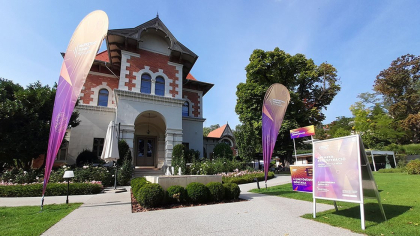
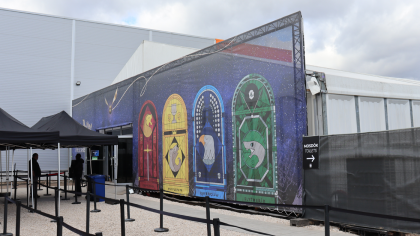
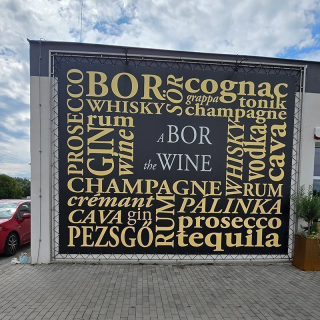
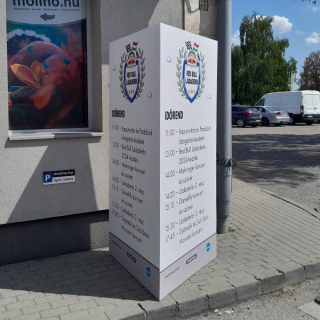
In addition to the fact that on-site advertising materials – mesh banners, large-format banners, vinyl decorations – have a functional purpose (e.g. wayfinding, crowd management, or masking), we use all of them to ensure a consistent visual identity, which we also extend to the exhibitors – for example through the decoration of stands and wooden chalets. We believe that the footfall at stands is also connected to tasteful and attractive decoration.
Image source: https://aborfesztival.hu/hu Zsolt Szigetváry
Molino.hu: Yes, we also find that customers often buy not a product, but an experience.
László Pintér: We too strive for this and work hardest on giving our visitors experiences beyond simply organising the festival. This is also what consumers want – after all, they can buy the product itself elsewhere, but the experience – for example, being able to talk to the winemaker – is something they cannot get anywhere else. That is precisely why we are also grateful for exhibitors who authentically represent their own wineries and, alongside their products, give away as a gift the personal story behind the name – or behind a particular wine.
Molino.hu: Throughout our conversation it has become clear several times that authenticity is also a key value for you when it comes to yourselves. Does that include your personal presence at your events?
László Pintér: Of course – we are present at the festivals from start to finish!
From the site walk-throughs right through to the late-night closing of the festival days, we take part in the events – including our managing director, Zoltán Zilai.
Molino.hu: Your value-creating work is fantastic – the way you engage visitors through experiences to fall in love with Hungarian wine and promote it themselves!
How do you see this: as a mission? As a vocation?
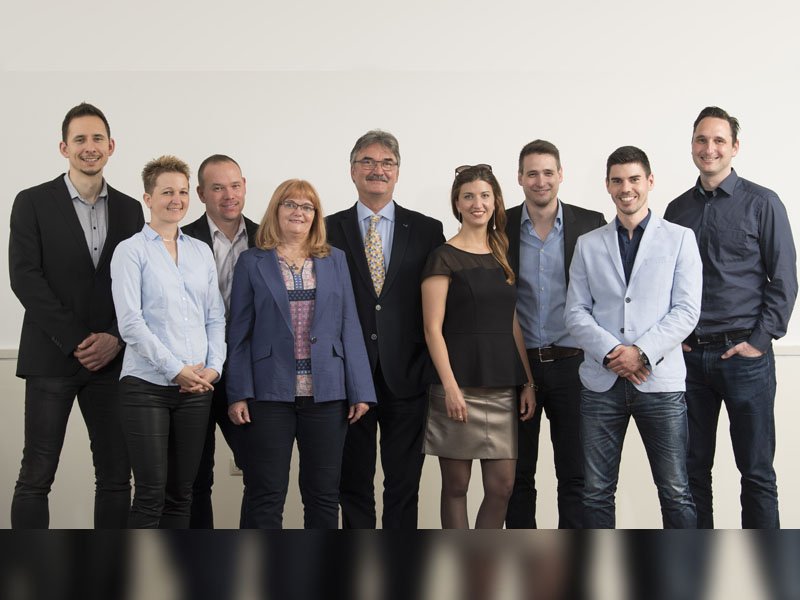
László Pintér: We don't necessarily see it that way, because what validates us most is the fact that we have been here for nearly 30 years – even though we have gone through a great many changes in that time, and have sometimes had to rise to enormous challenges. Our team consists of ten people; as a micro-community, we all equally share in the tasks and put our whole hearts into it. The key and the soul of our success is team unity.
Molino.hu: What are you most proud of when you look back over the past 30 years?
László Pintér: For example, the fact that we are still present in the Buda Castle District. We work hard to ensure that culture, folklore, and education are an integral part of our events; and every year our goal is to give our visitors more. Hungary has a wealth of treasures that rival those of other countries: neither is better or worse, but it is important to raise awareness that they exist side by side! It is important to showcase both.
Personally, what I am most proud of is being able to be a part of all of this.
Image source: https://aborfesztival.hu/hu Zsolt Szigetváry